
Welcome To The SYL Blog & Podcast

Empowering Busy Professionals to Thrive in Every Aspect of Life
"Fueling Your Path to Success, One Sip & One Conversation at a Time."
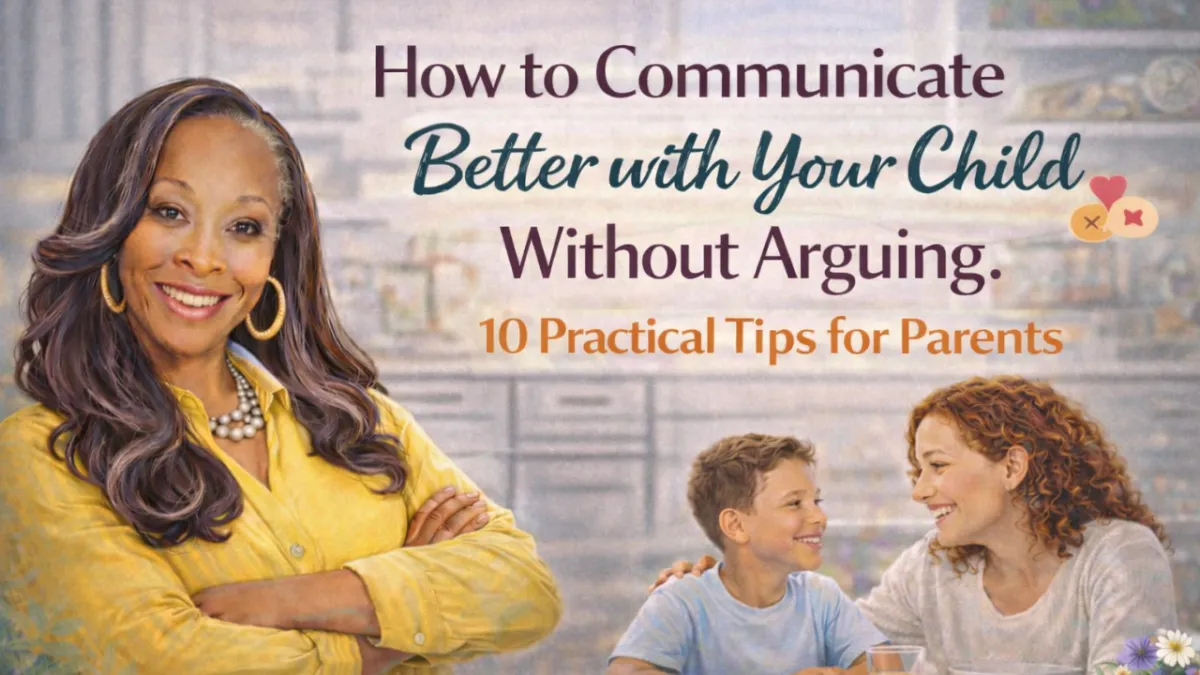
How to Communicate Better with Your Child Without Arguing
How to Communicate Better with Your Child Without Arguing
(Practical, Calm Parenting Strategies That Actually Work)
Hey, this is your parenting bestie, Diamond Taylor…
Let’s talk about something real: How to communicate better with your child without arguing. Because if we’re honest, most arguments at home aren’t about the issue… they’re about how we’re talking to each other.
And here’s the truth: communication isn’t just talking, it’s connection, leadership, and emotional safety all wrapped together. This sits right in the heart of our Communication & Connection pillar, where we replace power struggles with partnership.
So let’s walk this out together, step by step.
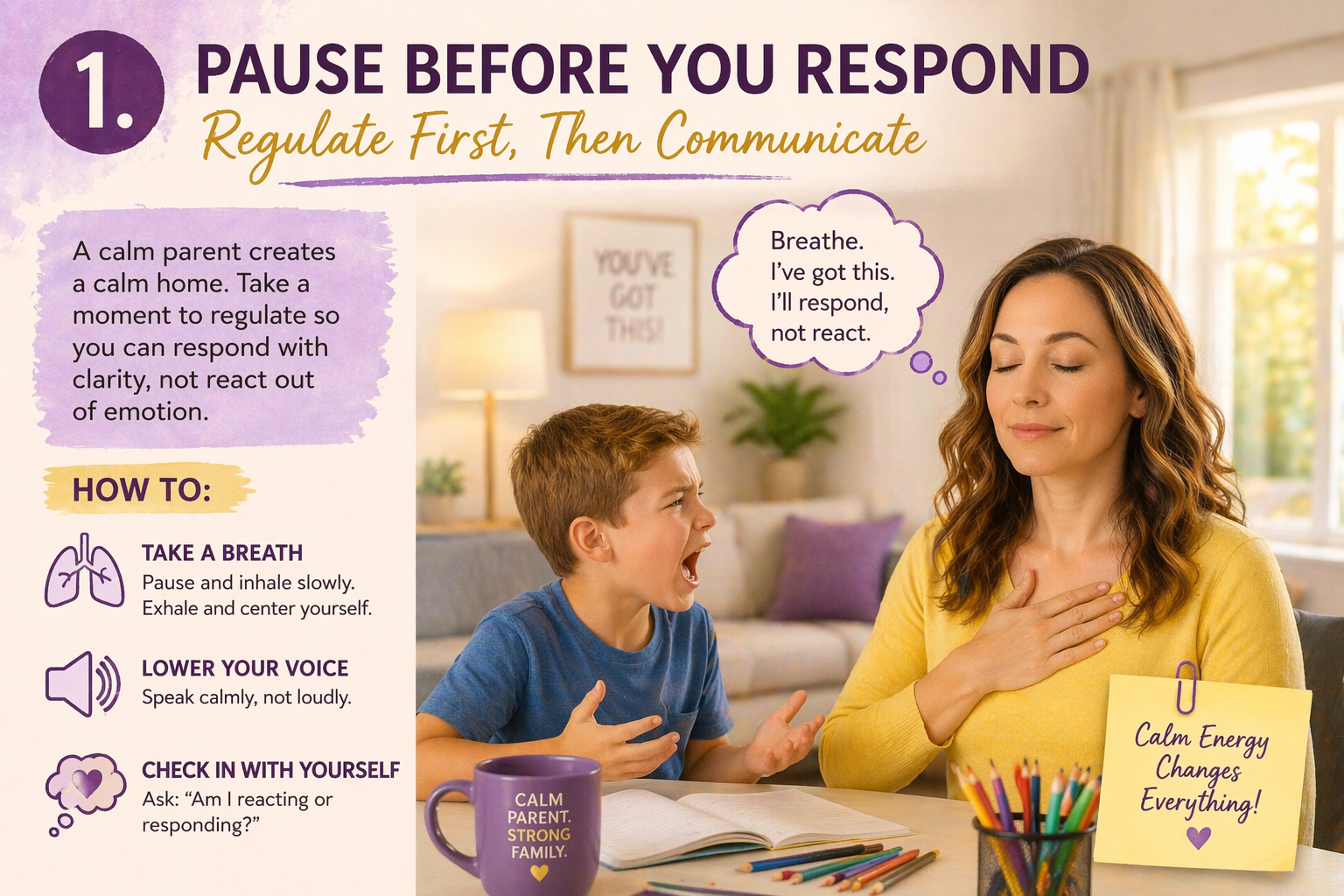
1. Pause Before You Respond (Not After)
🌿 Calm in the chaos starts with you.
Arguments usually escalate because we react fast. Your child says something, and boom, you’re already responding emotionally.
How to do it:
Take a breath before speaking (yes, even 3 seconds matter)
Lower your tone instead of raising it
Ask yourself: “Am I responding or reacting?”
☕ Friend-to-Friend: You don’t need to win the moment; you need to lead it.
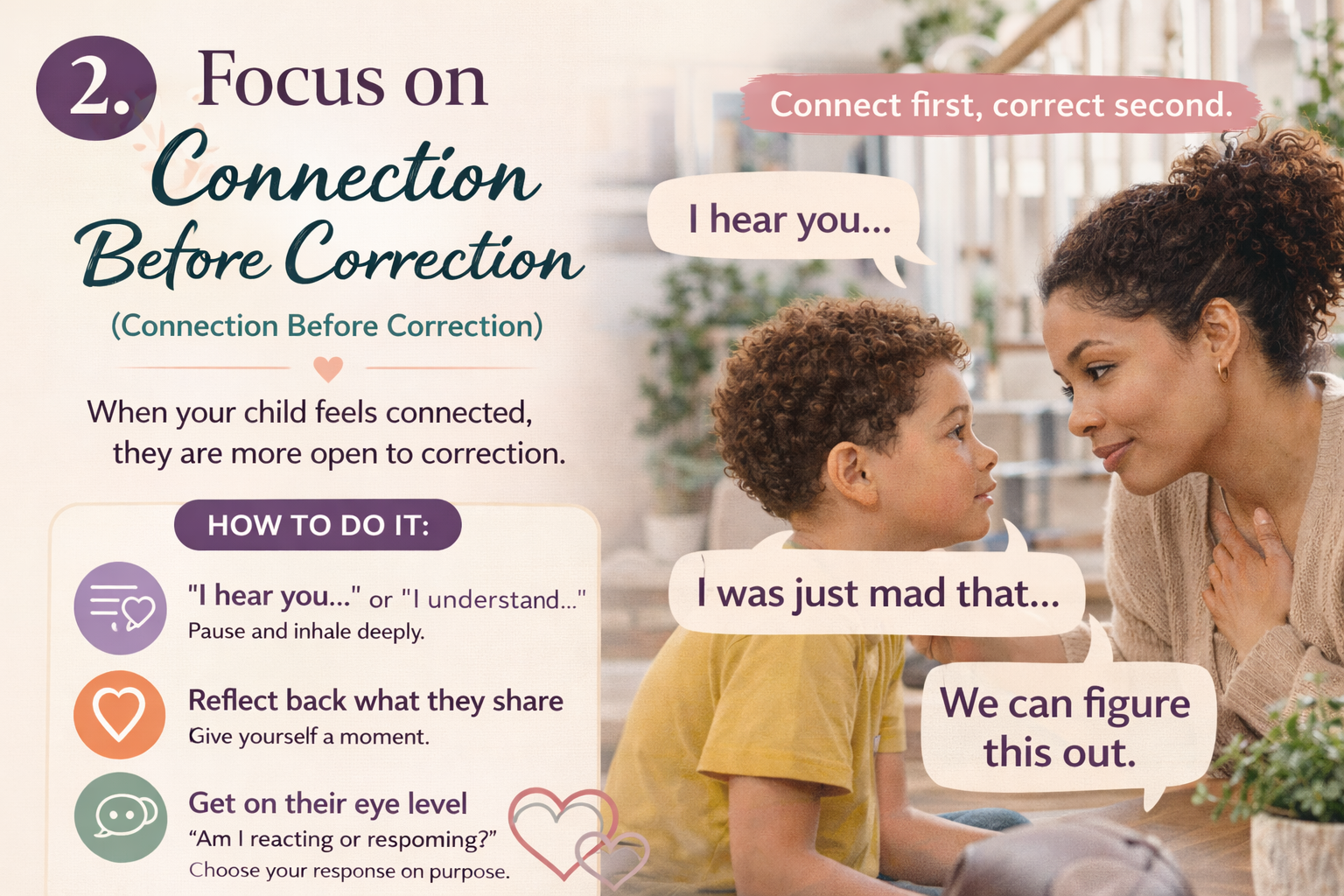
2. Focus on Connection Before Correction
Most arguments happen because kids feel misunderstood, not because they want to be difficult.
How to do it:
Start with: “I hear you…” or “I understand…”
Reflect what they said before correcting behavior
Get on their eye level when talking
Connection opens the door. Correction walks through it.
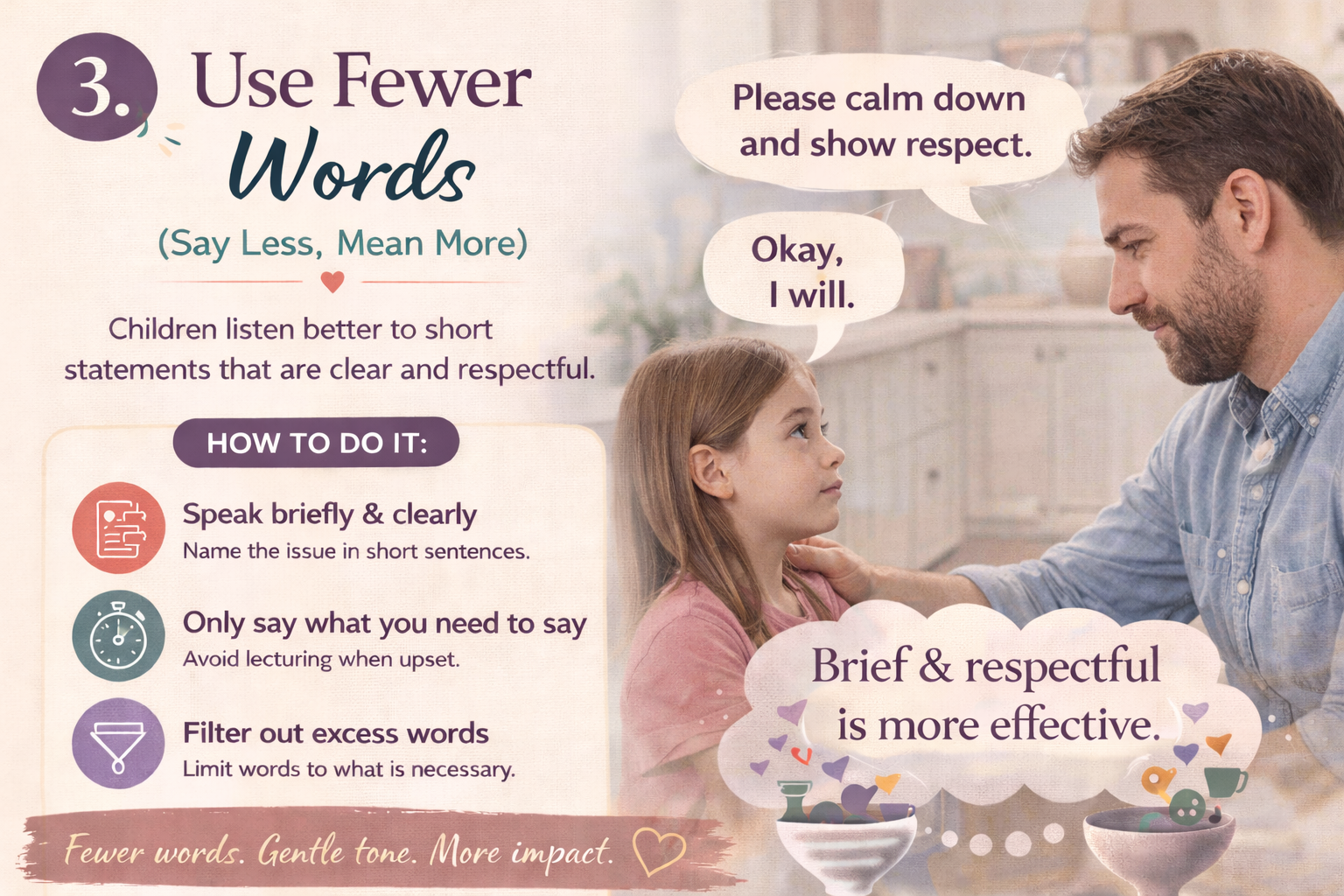
3. Use Fewer Words (Say Less, Mean More)
The more we talk, the more kids tune out.
How to do it:
Give short, clear directions
Avoid lectures
Stick to one message at a time
Example:
Instead of: “How many times do I have to tell you…”
Say: “Please put your shoes by the door.”
Simple. Clear. Effective.
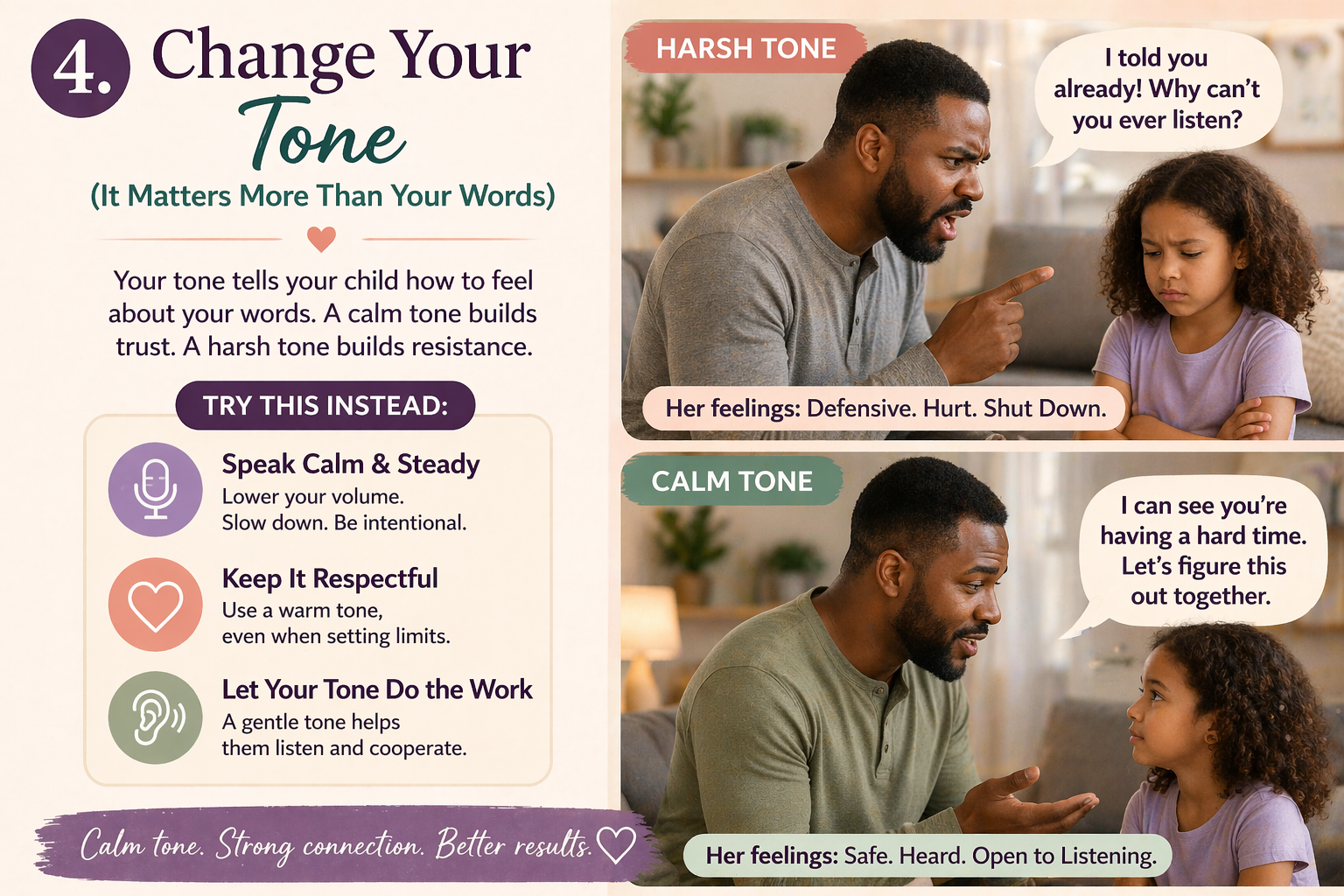
4. Change Your Tone (It Matters More Than Your Words)
Your child reacts more to how you say it than what you say.
How to do it:
Speak in a calm, firm tone (not harsh, not passive)
Slow your speech down
Avoid sarcasm or yelling
Your tone sets the emotional temperature of the conversation.
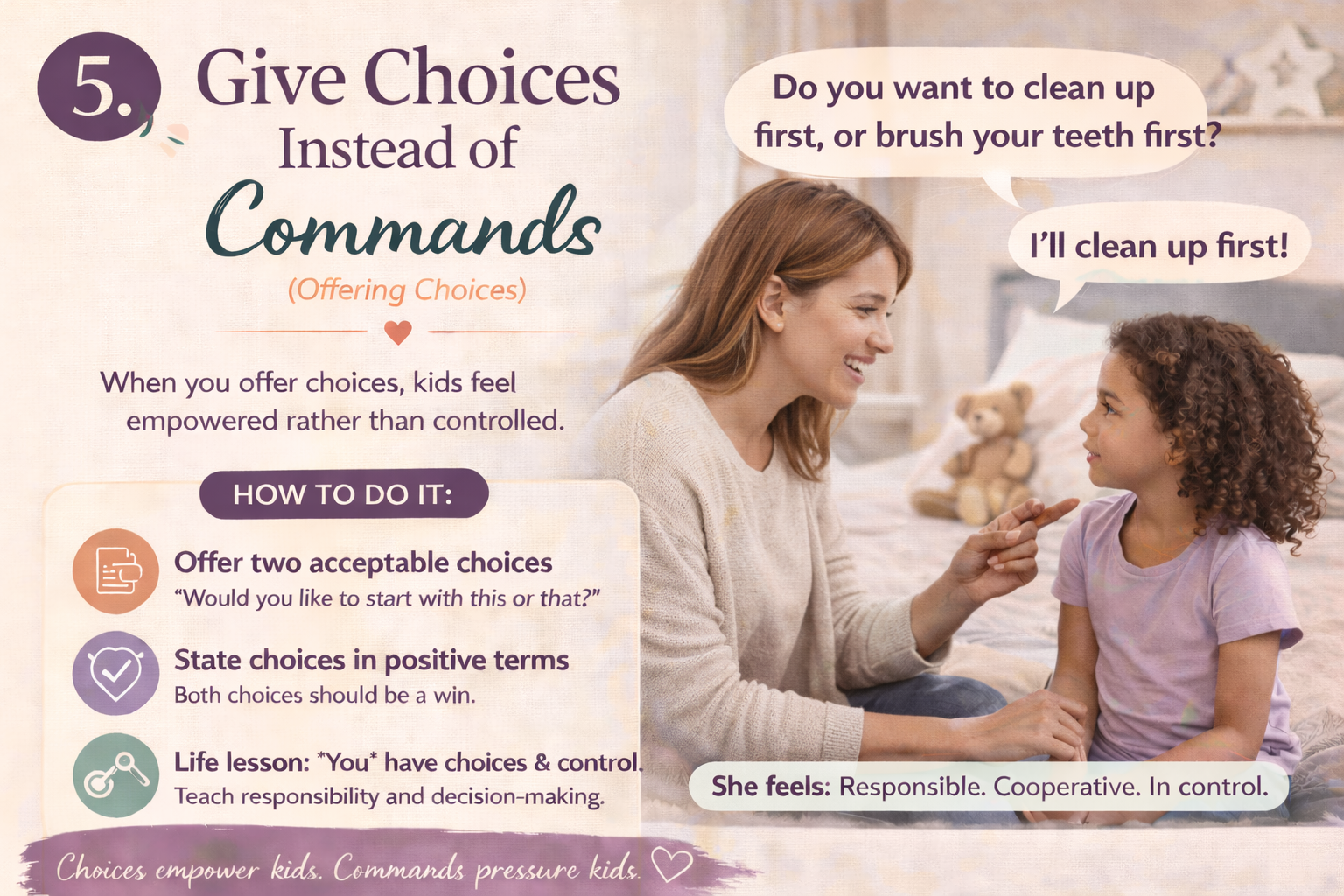
5. Give Choices Instead of Commands
Kids push back when they feel controlled—but respond better when they feel empowered.
How to do it:
Offer two acceptable options
Example: “Do you want to clean up now or in 5 minutes?”Keep both choices aligned with your expectations
This reduces power struggles instantly.
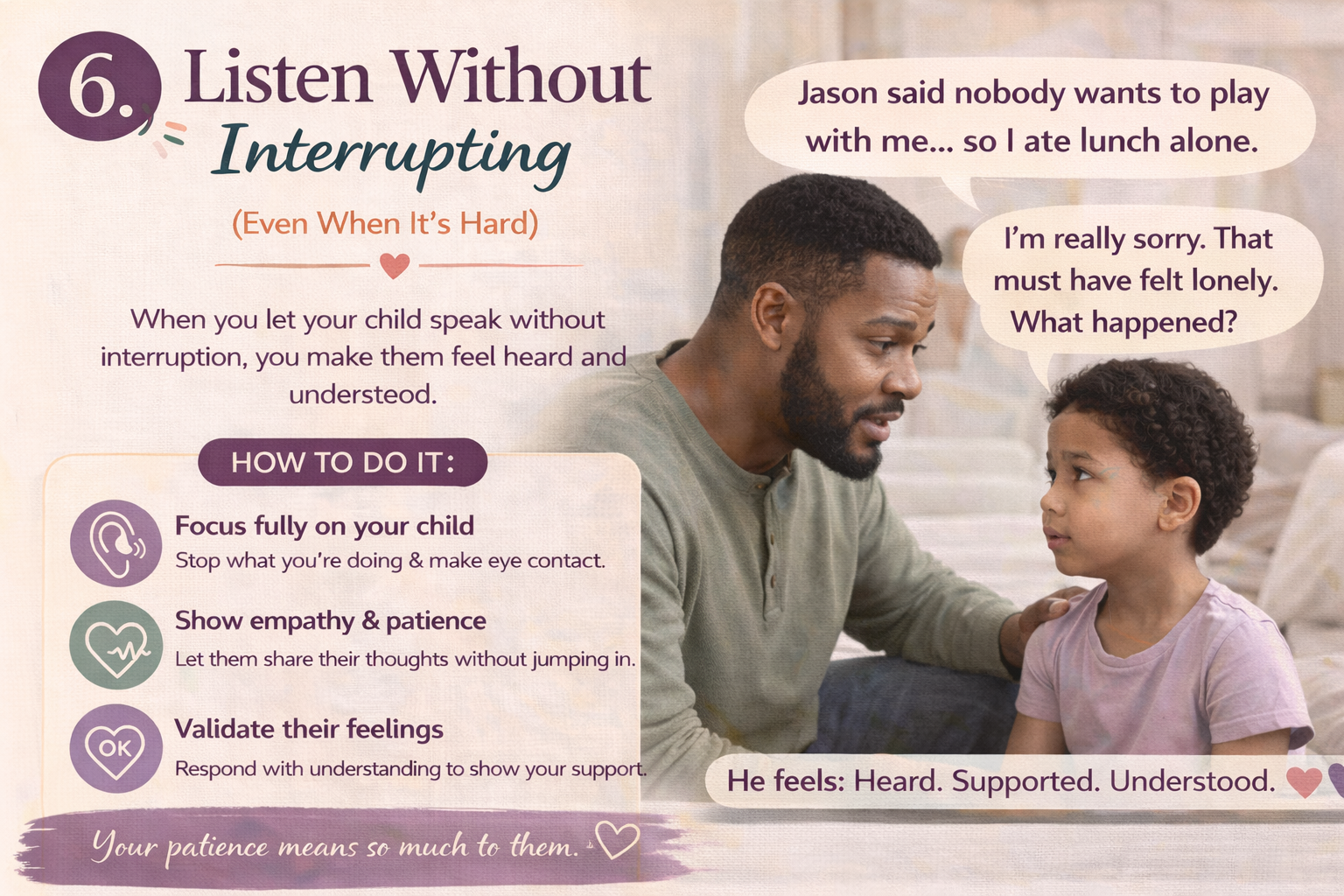
6. Listen Without Interrupting (Even When It’s Hard)
If your child doesn’t feel heard, they will keep escalating until they are.
How to do it:
Let them finish speaking
Don’t jump in to correct immediately
Repeat back what you heard
This teaches respect—and models it.
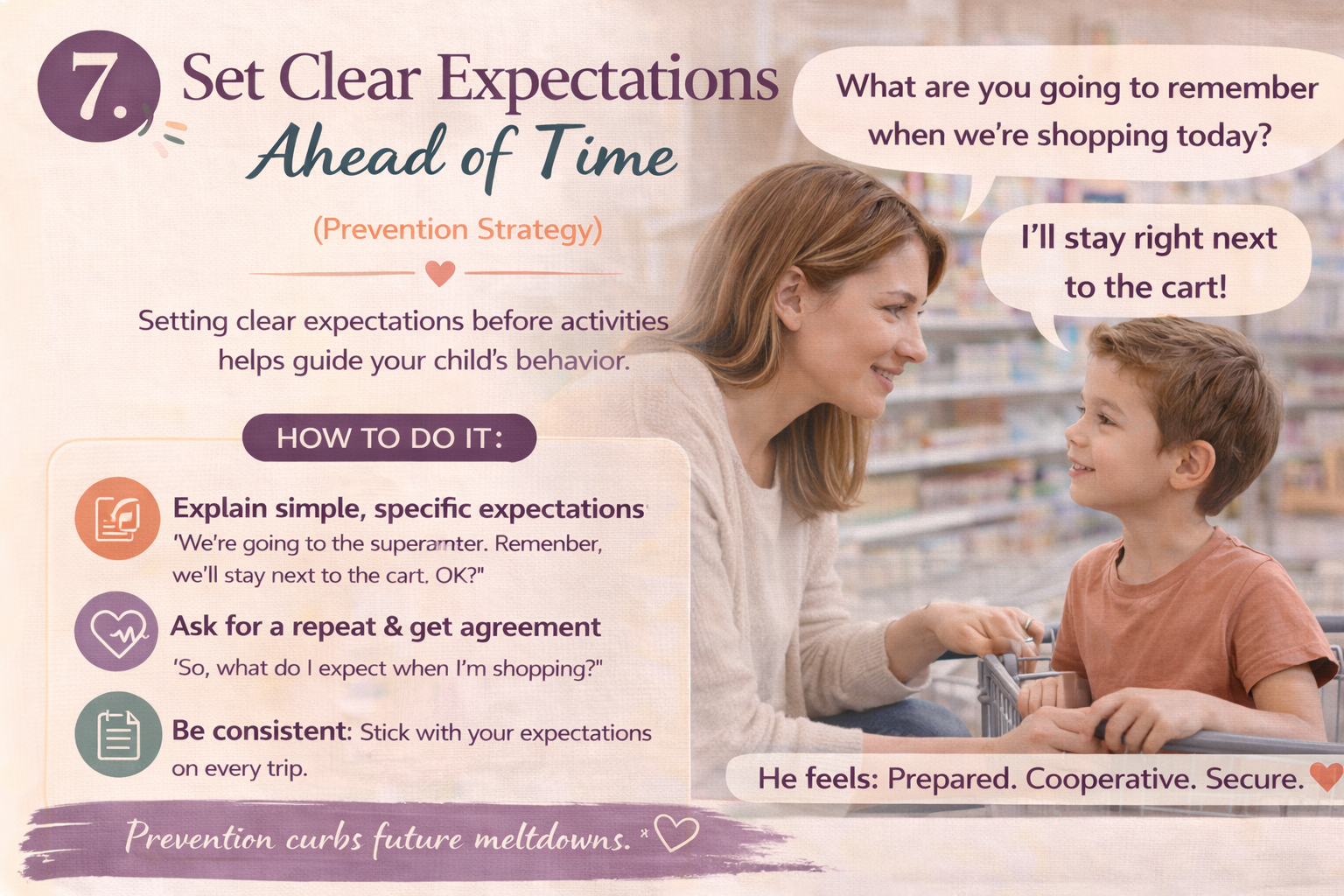
7. Set Clear Expectations Ahead of Time
Arguments often happen when expectations are unclear.
How to do it:
Set rules before situations (not during conflict)
Be specific: “Toys go away before dinner.”
Review expectations regularly
Clarity reduces confusion—and conflict.
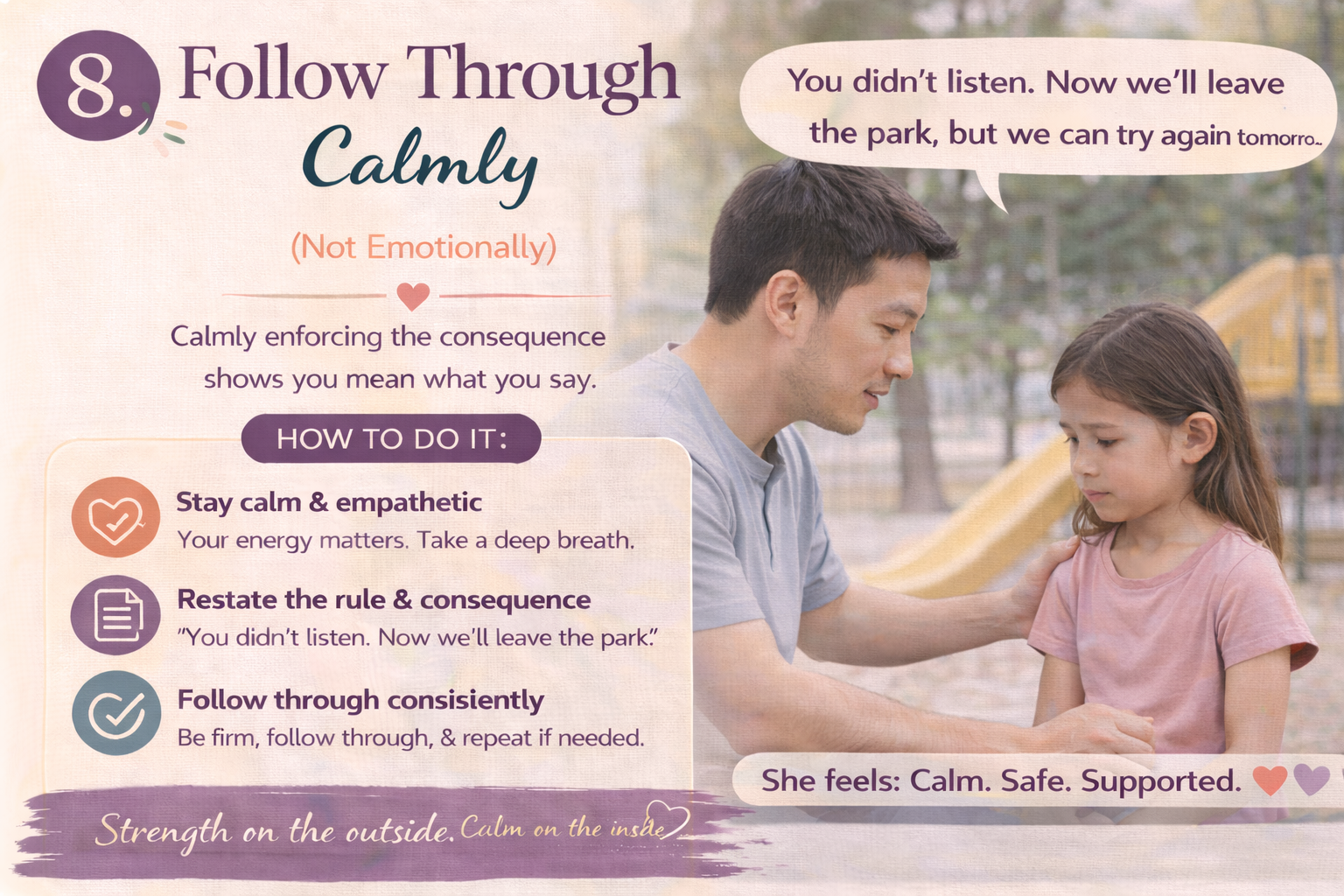
8. Follow Through Calmly (Not Emotionally)
Consistency builds trust. Inconsistency builds arguments.
How to do it:
Say what you mean—and follow through
Stay calm when enforcing consequences
Avoid empty threats
Your calm consistency teaches accountability without conflict.
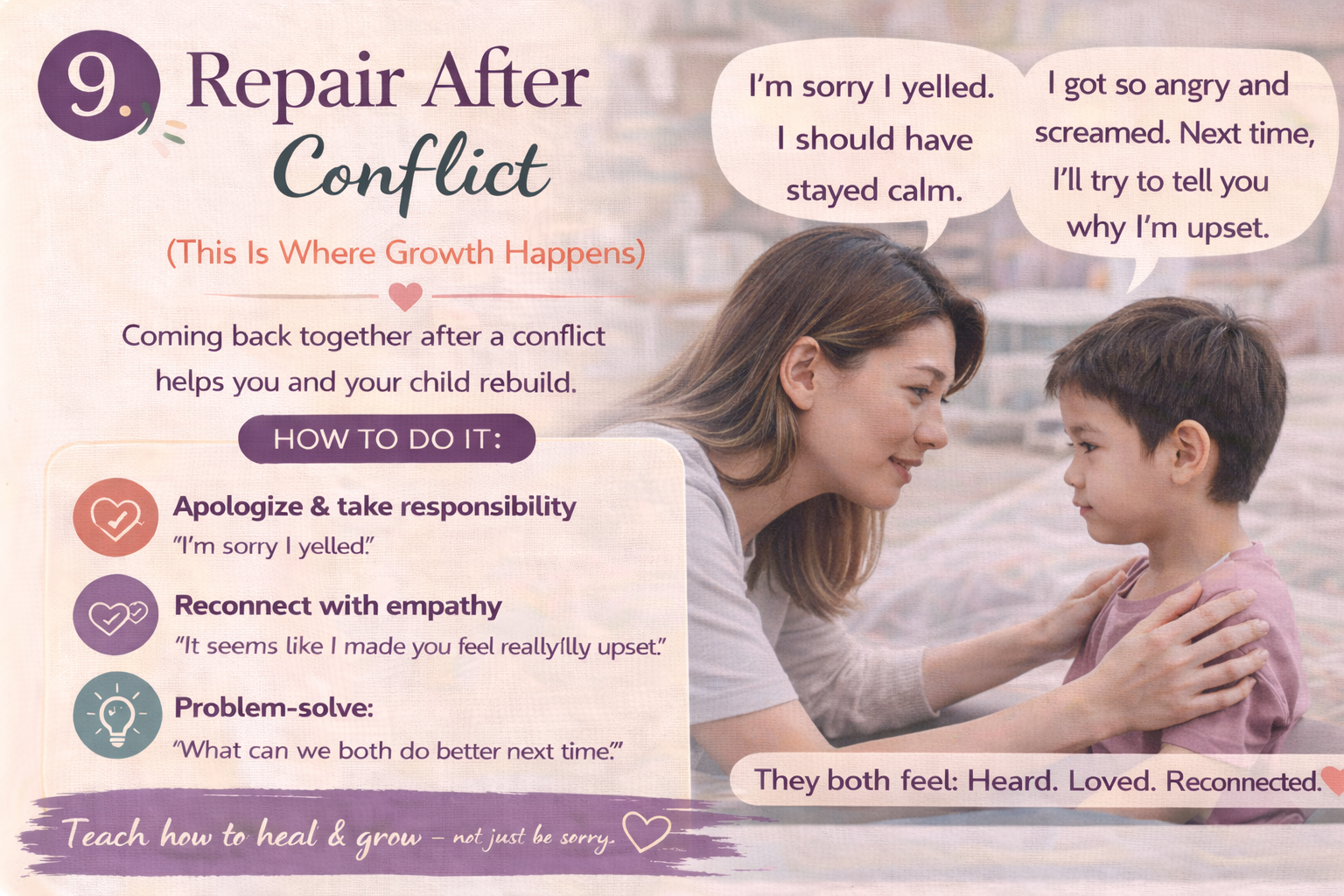
9. Repair After Conflict (This Is Where Growth Happens)
Even with the best strategies, hard moments will happen.
How to do it:
Go back and say: “Let’s try that again.”
Apologize if needed
Talk about what can be done differently next time
Repair builds stronger relationships than perfection ever could.
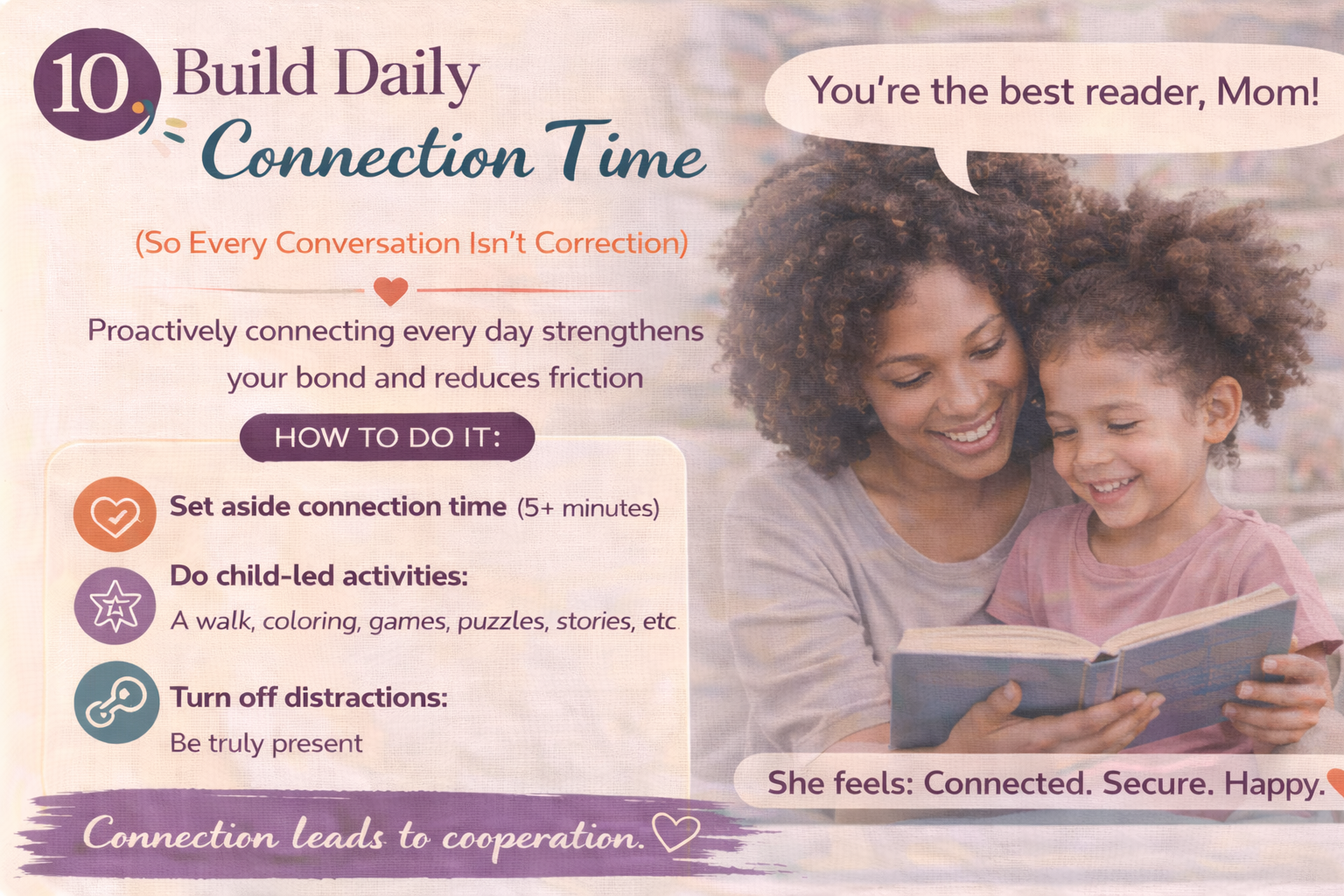
10. Build Daily Connection Time (So Every Conversation Isn’t Correction)
If the only time you talk is to correct behavior, communication will always feel negative.
How to do it:
Spend 10–15 minutes daily connecting (no phones, no distractions)
Let your child lead the activity
Focus on enjoyment, not teaching
Connection outside of conflict makes communication easier during conflict.

Final Thoughts
Better communication isn’t about being a perfect parent.
It’s about being intentional.
When you shift from reacting → responding
From controlling → connecting
From arguing → understanding
Everything in your home begins to change.
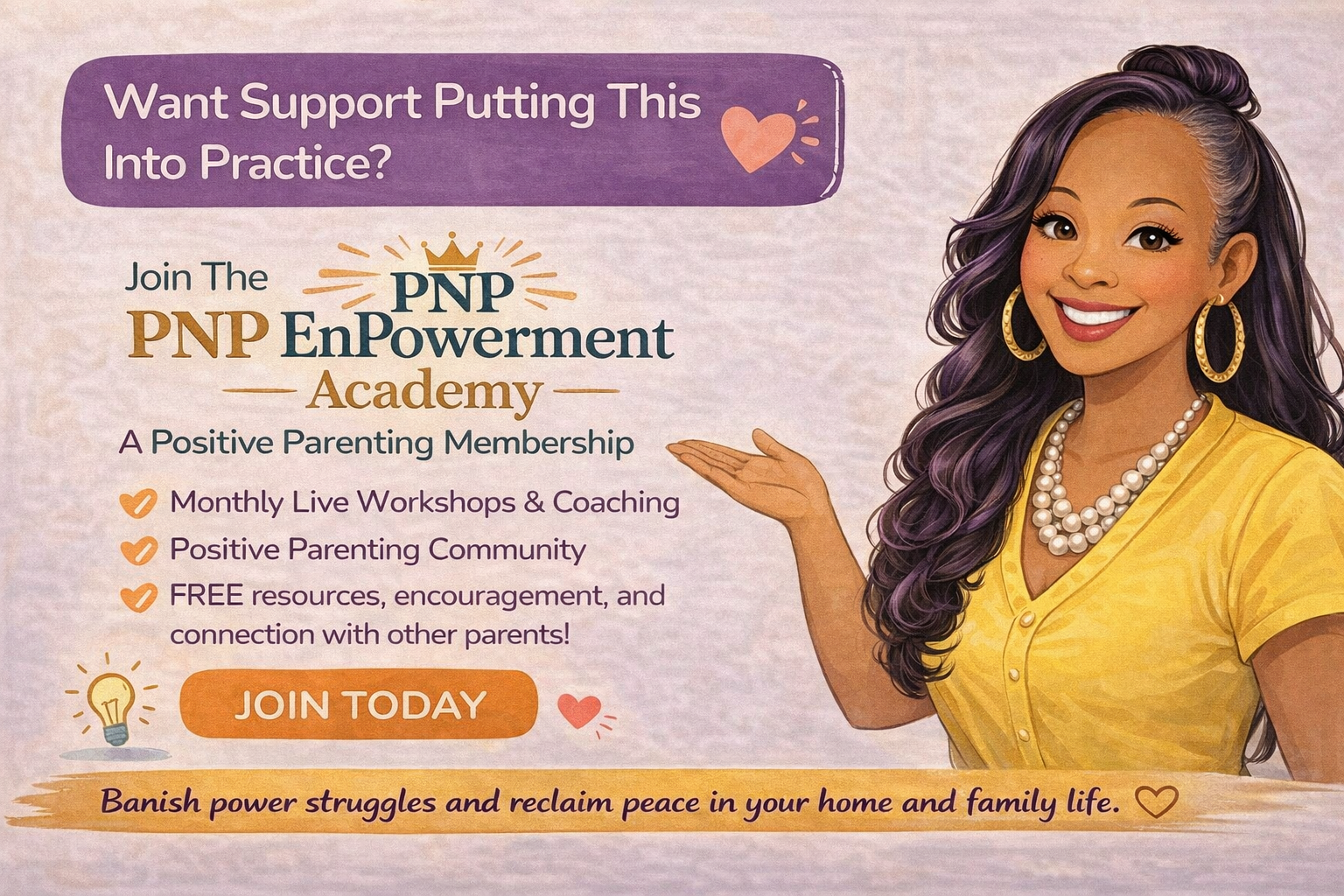
👉 Want Support Putting This Into Practice?
You don’t have to figure this out alone.
Inside the PNP EmPowerment Academy, we help parents like you:
✔ Build strong communication systems
✔ Reduce stress and overwhelm
✔ Create structure, calm, and connection at home
✔ Get real support, coaching, and accountability
👉 Join the PNP EmPowerment Academy today:
👉 Or book a Discovery Coaching Call and let’s build your plan together
Because it’s always better when we do things together 💜